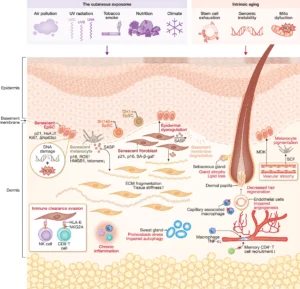
 Figure 1: Systemic deterioration of the skin ecosystem during aging. |
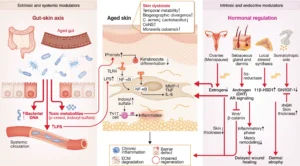 Figure 2: Converging gut–skin microbiome and endocrine mechanisms in skin aging. |
Skin ageing has long been considered an inevitable and largely irreversible process.
A major review published in The EMBO Journal by Runhan Li, Jingyun Zhang, Kehang Mao, Dawei Meng, Jing-Dong J. Han and colleagues challenges this traditional view.
The authors describe skin ageing not simply as the accumulation of wrinkles or collagen loss, but as a progressive breakdown of the entire skin ecosystem:
Cellular senescence, mitochondrial dysfunction, epigenetic drift, stem-cell exhaustion, chronic inflammation, microbiome dysregulation and disrupted communication between the epidermis, dermis and skin appendages.
The key question is no longer only how to slow these changes.
It is whether we can measure them accurately and biologically reverse them.
Emerging strategies include cellular and chemical reprogramming, senescence-targeted approaches, metabolic modulation, restoration of the tissue microenvironment, microbiome interventions and molecular skin-ageing clocks.
The scientific challenge remains considerable. Visible improvement is not necessarily biological rejuvenation, and many reversal strategies are still at the experimental stage.
But the conceptual shift is important:
Skin ageing may not be an entirely irreversible process.
This fundamental question will be at the heart of Skin Ageing & Challenges 2026:
Can We Reverse Skin Ageing? From Biological Clocks to Systems Reprogramming
Is Skin Ageing Still Irreversible?
For more information:
Read the full news here
Read the news on LinkedIn
Share this with your circle