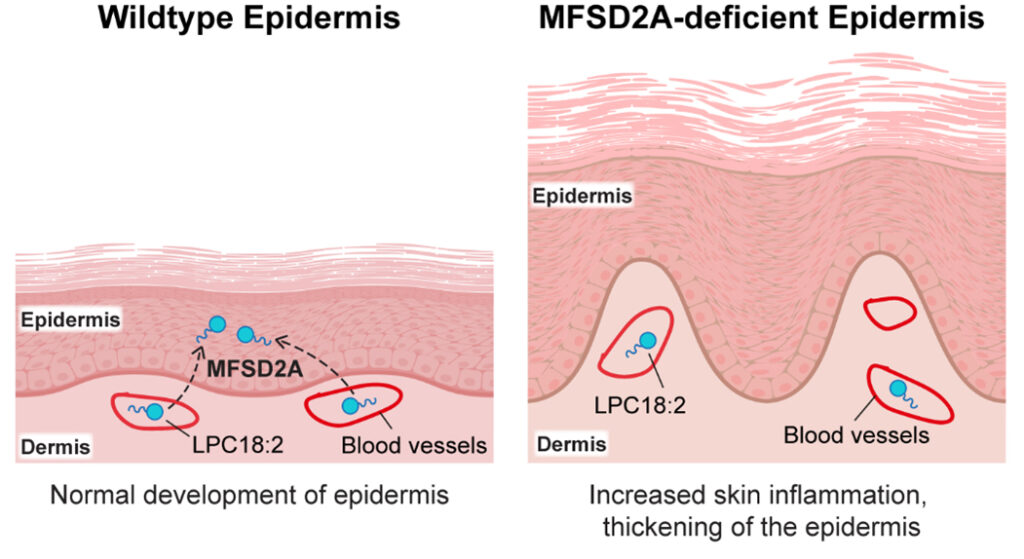
MFSD2A is required for the uptake of LPCs containing linoleic acid (LPC18:2) from the blood for normal development of the epidermis.
Duke-NUS scientists identify MFSD2A, a key lipid transporter that may open new directions for skin barrier repair, eczema, psoriasis, and future skin innovation.
Our skin is our first protection against the outside world. Every day, it defends us against dehydration, microbes, pollution, allergens, irritants, and environmental stress.
To do this properly, the skin needs a strong skin barrier. This barrier depends not only on skin cells, but also on a precise balance of fats, or lipids, that help keep the skin flexible, hydrated, and protected.
This study has identified an important mechanism that helps the skin receive these essential fats from the blood. The researchers showed that a protein called MFSD2A works like a transporter, allowing skin cells to take up specific fat molecules called lysophosphatidylcholines, or LPCs.
These LPCs carry linoleic acid, an essential fatty acid that the body cannot make by itself. Linoleic acid must come from the diet and is known to be important for maintaining a healthy skin barrier.
What Did the Scientists Discover?
The researchers found that MFSD2A is essential for bringing the right fats into the outer layer of the skin, known as the epidermis.
When MFSD2A was missing in experimental models, the skin could no longer maintain normal lipid balance. The result was a damaged skin barrier, inflammation, thickened skin, and signs similar to chronic inflammatory skin disease.
This is important because it shows that simply having enough essential fatty acids in the body may not be sufficient. The skin also needs the right transport system to deliver these fats into skin cells.
In other words, healthy skin depends not only on nutrition, but also on the skin’s ability to use and transport lipids correctly.
Why Is This Important for Eczema and Psoriasis?
Many common skin diseases are linked to a weak or damaged skin barrier. This includes eczema, psoriasis, and other inflammatory skin conditions.
When the barrier is weakened, the skin loses water more easily and becomes more vulnerable to irritants, allergens, microbes, and inflammation. This can create a vicious cycle: barrier damage causes inflammation, and inflammation further damages the barrier.
The Duke-NUS study suggests that impaired lipid transport may be one of the hidden reasons why the skin barrier fails in some patients.
The researchers also reported that MFSD2A levels were reduced in the outer skin layer of people with eczema and autoimmune skin conditions. This raises an important possibility: restoring or supporting lipid transport could become a future strategy to help the skin repair itself.
What Is the Impact on Skin Innovation?
This discovery could influence the future of skin health in several ways.
First, it gives scientists and dermatology innovators a new biological target: MFSD2A-mediated lipid transport. Instead of focusing only on creams that repair the surface of the skin, future approaches may aim to improve how skin cells receive and process essential lipids from within.
Second, it may help develop more precise lipid-based products. Many skincare products already use oils, ceramides, fatty acids, or barrier-repair ingredients. This study suggests that the next generation of skin innovation may need to be more targeted: not just adding fats to the skin, but understanding which lipids are needed, how they are transported, and whether skin cells can properly use them.
Third, this work may support the development of new nutritional or topical strategies based on LPCs rich in linoleic acid. These could potentially be explored for skin barrier repair, inflammatory skin conditions, or preventive skin health.
Fourth, MFSD2A could become a future biomarker. In the long term, measuring lipid transport activity may help identify people whose skin barrier problems are linked to poor lipid uptake.
A New Direction for Skin Challenges 2026
This discovery will be among the emerging scientific questions discussed at Skin Challenges 2026, where international experts will explore how new advances in skin biology can be translated into better strategies for prevention, repair, and innovation.
The study raises several key questions for the future of dermatology and skin science:
- Can lipid transport be targeted to repair a damaged skin barrier?
- Could MFSD2A become a biomarker for fragile or inflamed skin?
- Can nutrition, topical formulations, and biotechnology converge to improve skin resilience?
- Will the next generation of skin innovation move beyond surface hydration toward cellular lipid delivery?
These questions are central to the future of skin barrier research and will help shape discussions around eczema, psoriasis, inflammatory skin disorders, healthy aging, and advanced skin care technologies.
Read news on LinkedIn
Read the complete news by B.H. Wong, K. Mishra, C.F. Chin, D.L.A. Galam, B.C. Tan, M. Ding, F. Torta, J. Behmoaras, A.W.C. Chua, & D.L. Silver, Mfsd2a is important for maintaining epidermal homeostasis, Proc. Natl. Acad. Sci. U.S.A. 123 (8) e2531159123,. here
Share this with your circle